Alt-Arts: The Multiplicity of the plumb
A series of profiles, written by Ashley Diana Culver, highlighting alternative art spaces in Toronto and the people who make them.
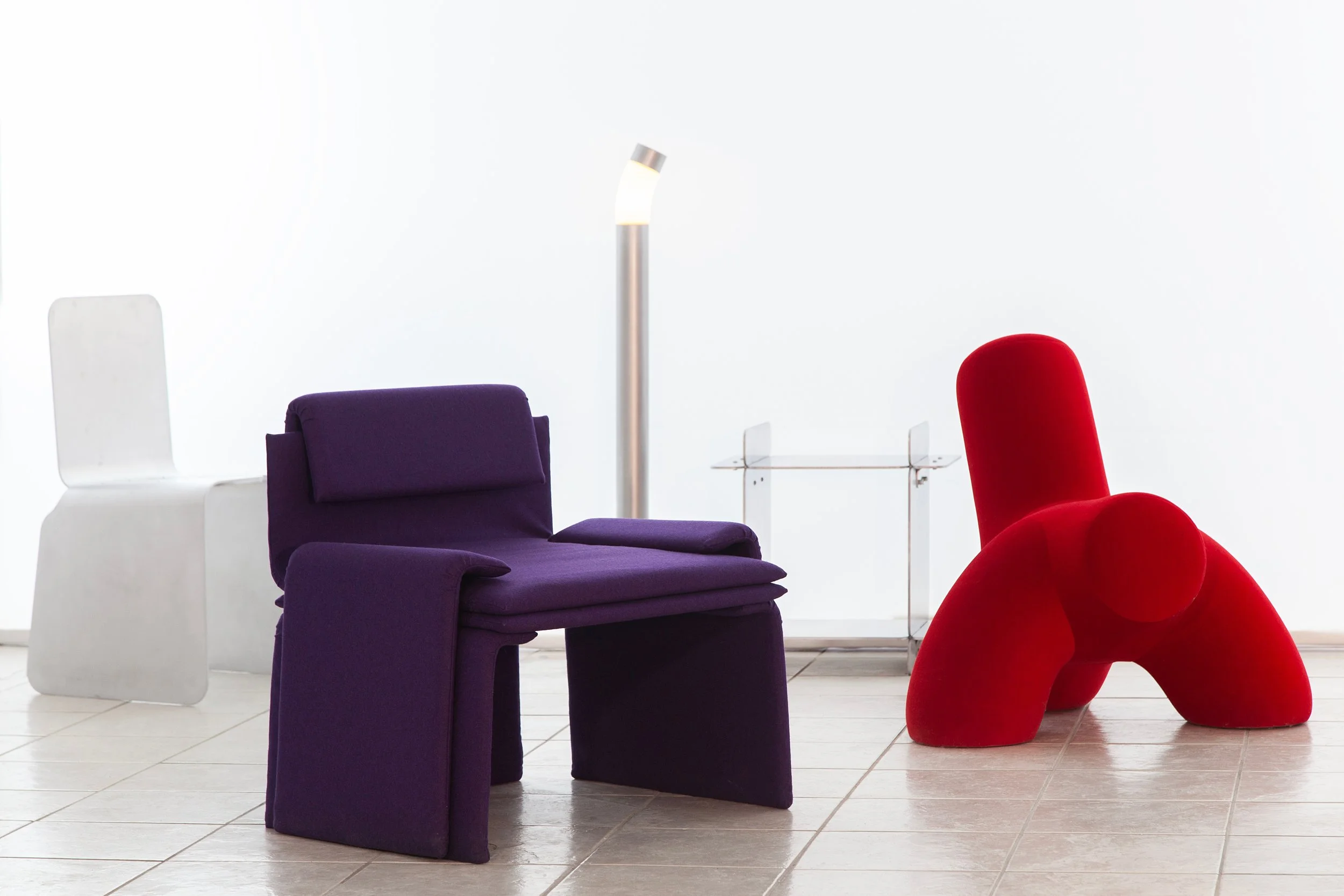
ENSSSEMBLE, 2025, installation view, the plumb. Photo: Simon S. Belleau.
1.
One day in the spring of 2020, Daniel Griffin Hunt found himself in a basement below Dr. D’Orio and Associates Eye Care with the landlord and listing agent. While scrolling real estate listings–a practice he maintains today–Hunt came across a low resolution image of the location. He knew this was a sign of an undervalued property. Hunt had been looking for a space since he returned to the city in 2018 after running Y+ Contemporary, an artist-run studio and gallery in Scarborough, with Dorica Manuel and Tiffany Schofield for the previous three years.
*** Correction for online edition: Yplus started with four members, Tiffany Schofield, Dorica Manuel, Daniel Griffin Hunt, and Danielle Denis
Now, in the basement, the three wore medical masks in compliance with health guidelines as they toured a long windowless rectangular room. Hunt inquired about the second room parallel to the one listed. The question led to a conversation about why he needed so much space, just what exactly he was planning on doing, and the negotiation of a lease for the entire 2,000 square foot underground unit. This is the first instance of multiplicity in what would become the plumb. More is more.
Before leaving, Hunt took a video of the space with his Samsung Galaxy, in which, due to the broken camera, “everything looked underwater.” He shared this with artist Emma Welch. They had worked together in 2017 when Hunt curated an exhibition at Y+ Contemporary of sadsadderdaze, a collective composed of Welch, Emma Green, Alison Postma, and Elana Shvalbe. From here, they began reaching out to others. “I needed to sign the lease and needed a first and last [month rent], so there was urgency,” says Hunt.
One of the people Hunt and Welch reached out to was artist Anthony Douglas Cooper, who was previously part of VSVSVS, a seven-person collective that lived and worked in a warehouse along Lake Ontario. He reflects, “When we were forming [the plumb], the model was: let’s make up the model. That’s one of my favourite things.”
The number of members of the plumb was determined by dividing the monthly rent into an affordable amount. With fifteen individuals each contributing $140 every month, they could cover the cost of the space. And, even though Hunt was the only one who viewed the space prior to signing the lease, it quickly became a non-hierarchical group endeavor. “A large amount of trust went into the beginning,” says Welch.
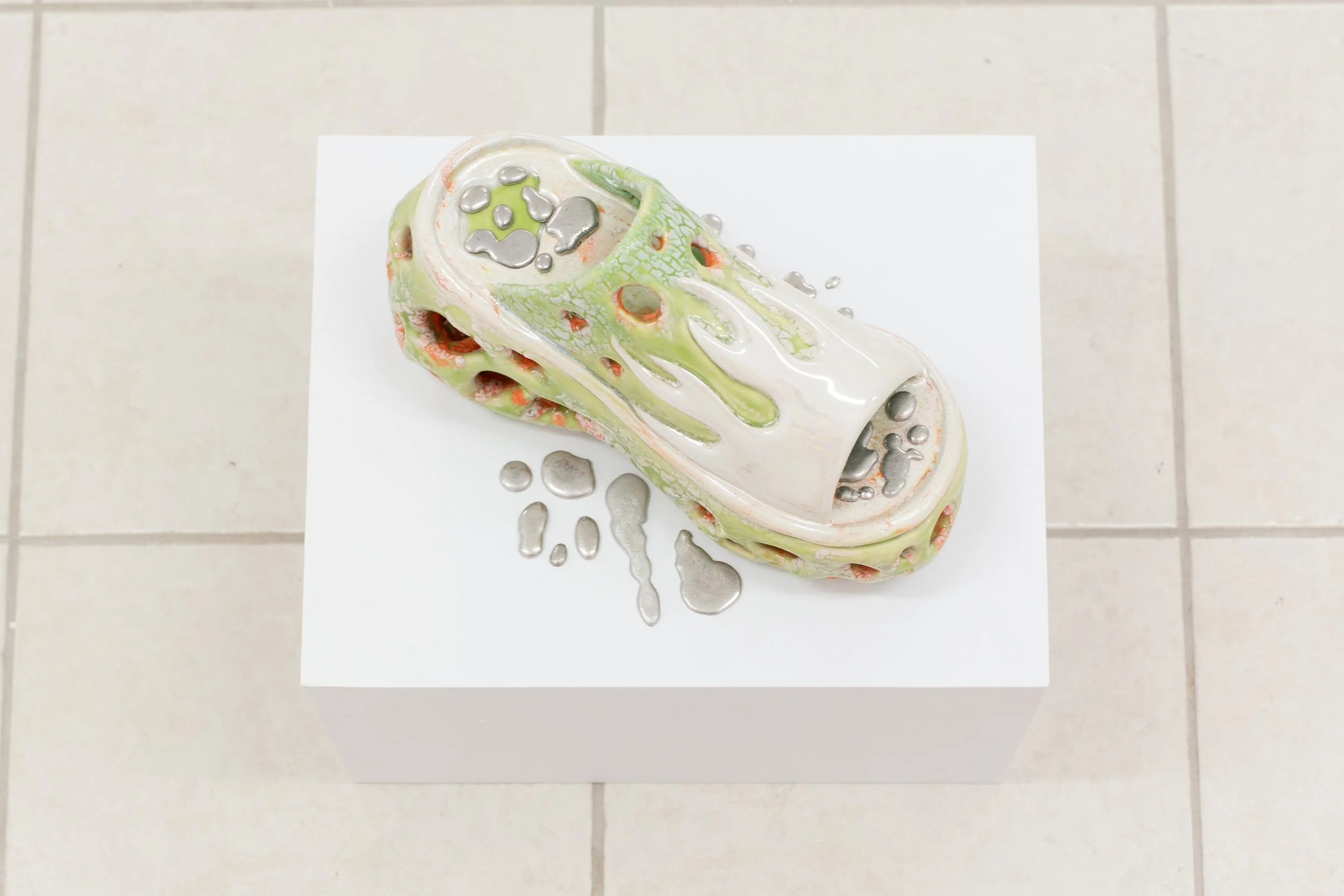
Kaley Flowers, wedge drip melt slip, 2021. Ceramic, glaze, lustre, metal, epoxy, ash, 11.5 x 4.5 x 6 inches. Courtesy of the artist and the plumb. Photo: Alison Postma.
The founding members include Amanda Boulos, Laura Carusi, Anthony Cooper, Laura Demers, Emma Green, Daniel Griffin Hunt, Nadine Maher, Dainesha Nugent-Parlache, John Nyman, Alison Postma, Claudia Rick, Miles Rufelds, Callum Schuster, Blair Swann, and Emma Welch.
That summer, at least for some, wallets were fairly full and calendars were empty. Deaths from covid were continuing to rise. Canada Emergency Response Benefit (CERB) was providing monthly payments to individuals whose employment was affected. The Canada-United States border was closed. Ontario was going in and out of government lockdown. The project was something to do.
July and August were spent meeting on Zoom, in the park, and in their space at 1655 Dufferin Street in Toronto. Some of them were meeting for the first time, and it was through renovating the space that the collective gelled. They scrubbed, drywalled, sanded, painted, and drank together.
For their first exhibition, the members put on a group show of their own work. The fact that not all of them are visual artists simply made it more multifaceted. Pits, Seeds ran from September 10-20, 2020. Nyman, a poet, exhibited a wall vinyl with three lines in which various strokes were missing from each letter. Welch recalls cutting sheets of optium acrylic by hand in her studio to help Demers frame her series of charcoal with graphite drawings. The inaugural show introduced the collective to each other and as a whole.
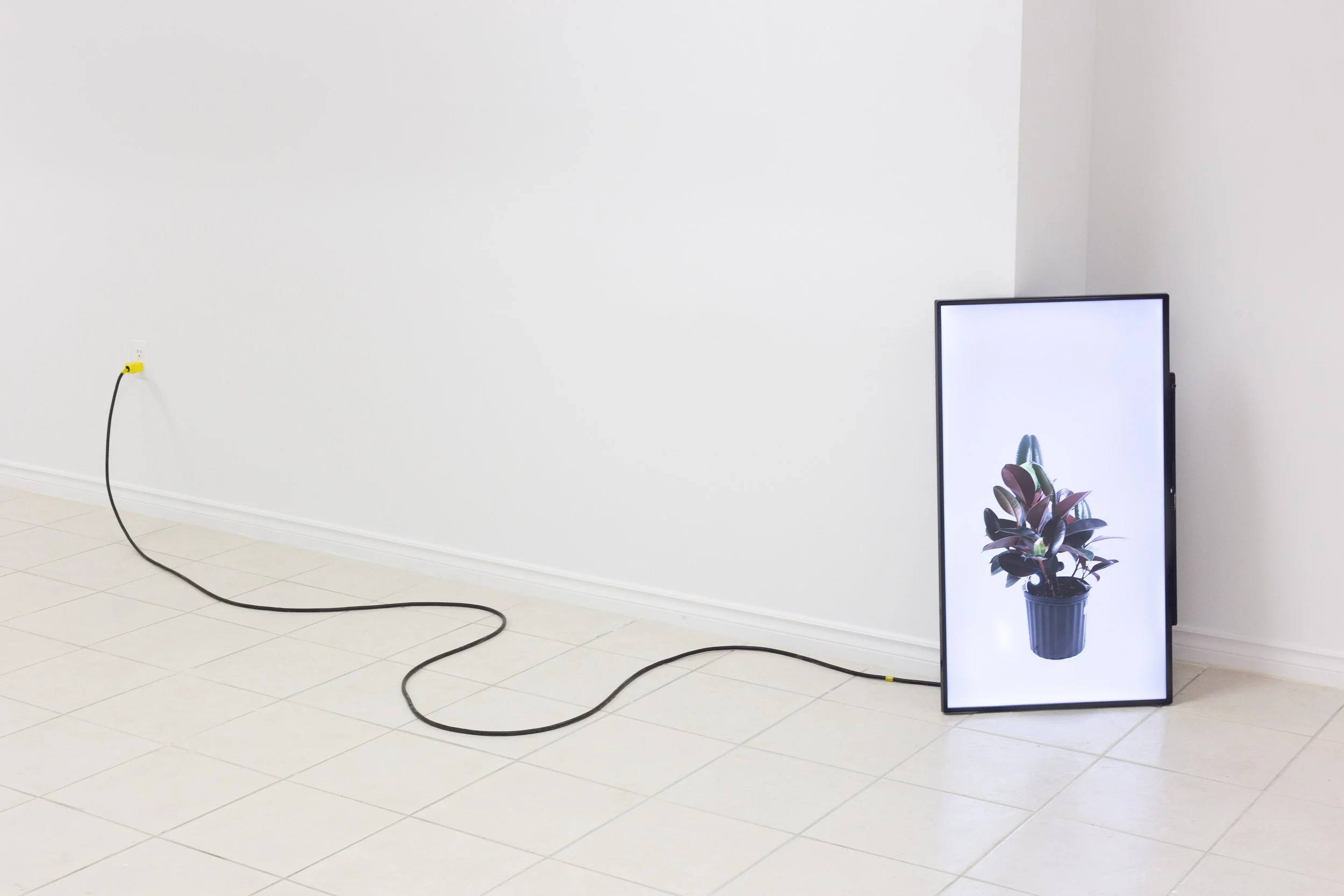
Miles Rufelds, “Thirty cents, fifty cents…”, 2020. Silent video, 16:9 (vertical orientation). Photo: Alison Postma.
2.
Their physical location–a subterranean multi-room clubhouse–reflects this abundance, “offering a surplus of space in a city where space is at a premium,” as their website states. Exhibition sites consist of two rectangular rooms–referred to as north and south or a and b or the one with a door and one without–the pit, the lobby, the bar, and the lightbox. The bar is functional during openings and presents a bonus exhibition space, with artists installing two-dimensional work within the vertical panels. Green remembers coming across a Facebook Marketplace post for the wooden bar counter that first summer. She immediately drove to the Beaches neighbourhood to pick it up for free.
Hunt also salvaged the lightbox for free when, in spring of 2021, Superframe–where he was working as an art handler at the time–was disposing of it. A Project Support Award from the Toronto Friends of the Visual Arts, along with volunteer labour from members, helped with rewiring and installing the lightbox next to the plumb’s entrance in the brick alleyway. As with their introductory exhibition, the plumb chose one of their own for the first installment in the lightbox as a sort of dress rehearsal. The well is deep, you can never fill it is a photographic collage by Swann. Think cliché Sunset Boulevard: silhouettes of palm trees on pink-purple sky with glowing red taillights of traffic. The rip from when Swann tore the image from a magazine runs along the bottom and nods to his hand in the work as well as the source material. Swann thought it fitting that this work and the framework of the lightbox point to the artifice of advertisement, and pedestrians need to walk away from the busyness of Dufferin Street down the alleyway in order to view it.
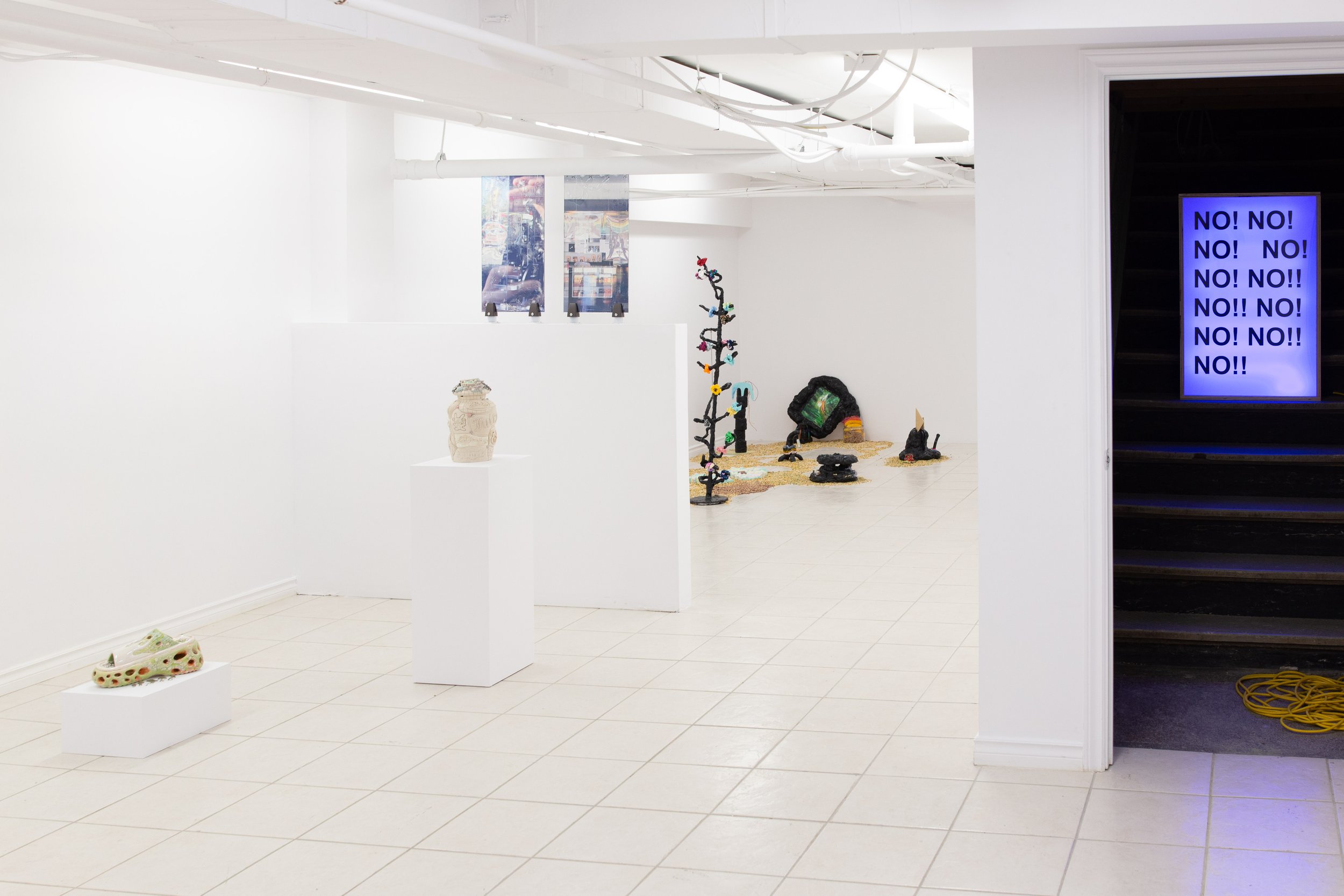
moveObjects On, 2021, installation view, the plumb. Photo: Alison Postma.
3.
the plumb tends to frequent in extra large group exhibitions. “Intially, we tried not to do solo exhibitions, as we were trying to do as much for as many artists as possible,” says Carusi. The number of artists included in a show often ranges from a half dozen into the double digits. Green and Postma curated moveObjects On with the work of 25 artists. The group exhibition ENSSSEMBLE had work by 21 emerging designers from Montreal. There are a few exceptions of two person and solo exhibitions, including one by Andrew James Paterson: Never Enough Night in April 26-May 26, 2024. The retrospective of the Toronto-based interdisciplinary artist, curated by Carusi and Cooper, along with Kate Whiteway, filled all the exhibitions sites at the plumb; this flipped the norm by showcasing the multitude of Paterson.
4.
In the fall of 2020, for the second exhibition, the plumb presented films and fabric installations in partnership with the Toronto Palestine Film Festival. Boulos linked the two organizations, as she served as a committee member for the festival. “We have our ears to the ground as to who needs space,” she says. “We all have connections or have worked for different establishments, and we bring them into the plumb.”
Like an octopus bringing in what is nearby with all its arms, the plumb has a history of working with many organizations. the plumb has done a pop-up at The J Spot, a window gallery in the east end of Toronto. It regularly participates in the annual CONTACT Photography Festival and DesignTO Festival. The curatorial collective Hearth and the graduate students from the University of Guelph have both put on exhibitions at the plumb. And, over the years they have worked in collaboration with Art Metropole, FADO, 7a*11d among others.
Perhaps the most incongruous alliance occurred in October 2021, when Art Toronto invited the plumb to have a free booth at their massive commercial fair in the Metro Toronto Convention Centre. They seized the opportunity by installing a new group of four artists each of the three day run of the fair. Most nights they sweet talked the security guards to let them stay late to flip the display. Unlike other booths, the goal was not to sell the art to attendees but gain exposure for the exhibiting artists, particularly the attention of commercial gallery dealers also working the fair, who passed by on their way to the toilets nearby. Tote bags were for sale and read: “buy the art that supports the community you live in support emerging mid career and senior artist even small offerings make a difference comments follow ups studio visits etc it means a lot for make tkaranto / toronto a sustainable place for making art for the future always remembering art is a fragile (but robust thank you) investment financially socially culturally.” Since then the art fair has offered the collective a discounted rate of $1,000–that’s about $1,000 too much.
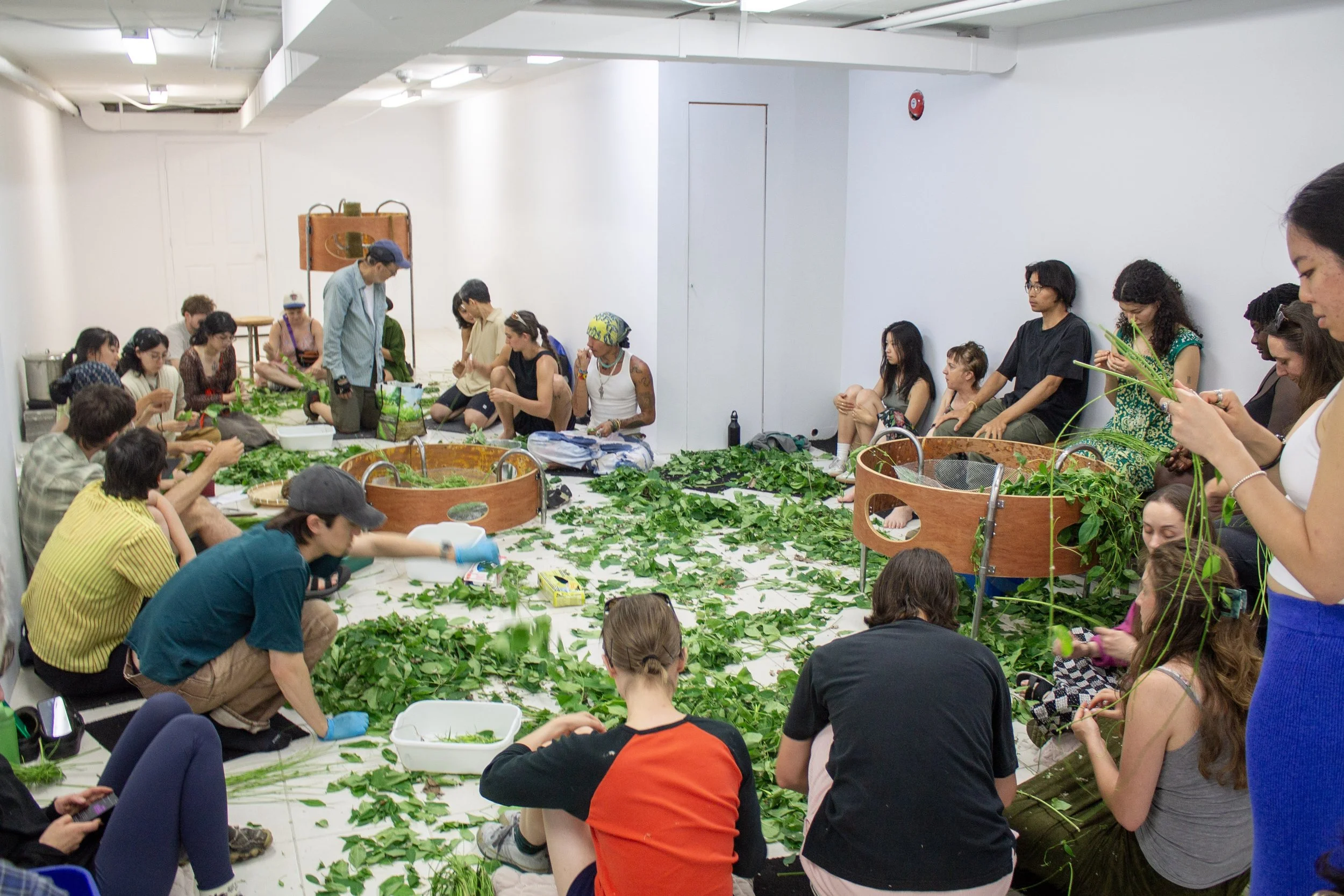
Processing Session as part of the exhibition, Tunnel Mound Comeback, 2025. Photos: Elena Kirby and Masumi Rodriguez.
5.
Changes have occurred in the membership since their launch. By 2023, Postma officially exited the plumb, needing to direct time and money towards school. In September 2023, Patrick Cruz, Warren Harper, Ciar O’Mahony and Emerald Repard-Denniston became new members of the collective. Avalon Mott, a curator, joined in January 2024; she had relocated from Vancouver a few years earlier and was looking for an outlet outside her role as Artistic Director at Xpace Cultural Centre. The additional members compensated for the increase in rent as well as the decreasing energy of some of the original members.
“You can’t go on the same way forever,” says Swann. “That’s the nature of project spaces, especially one open for over five years. It needs to change in order to continue.”
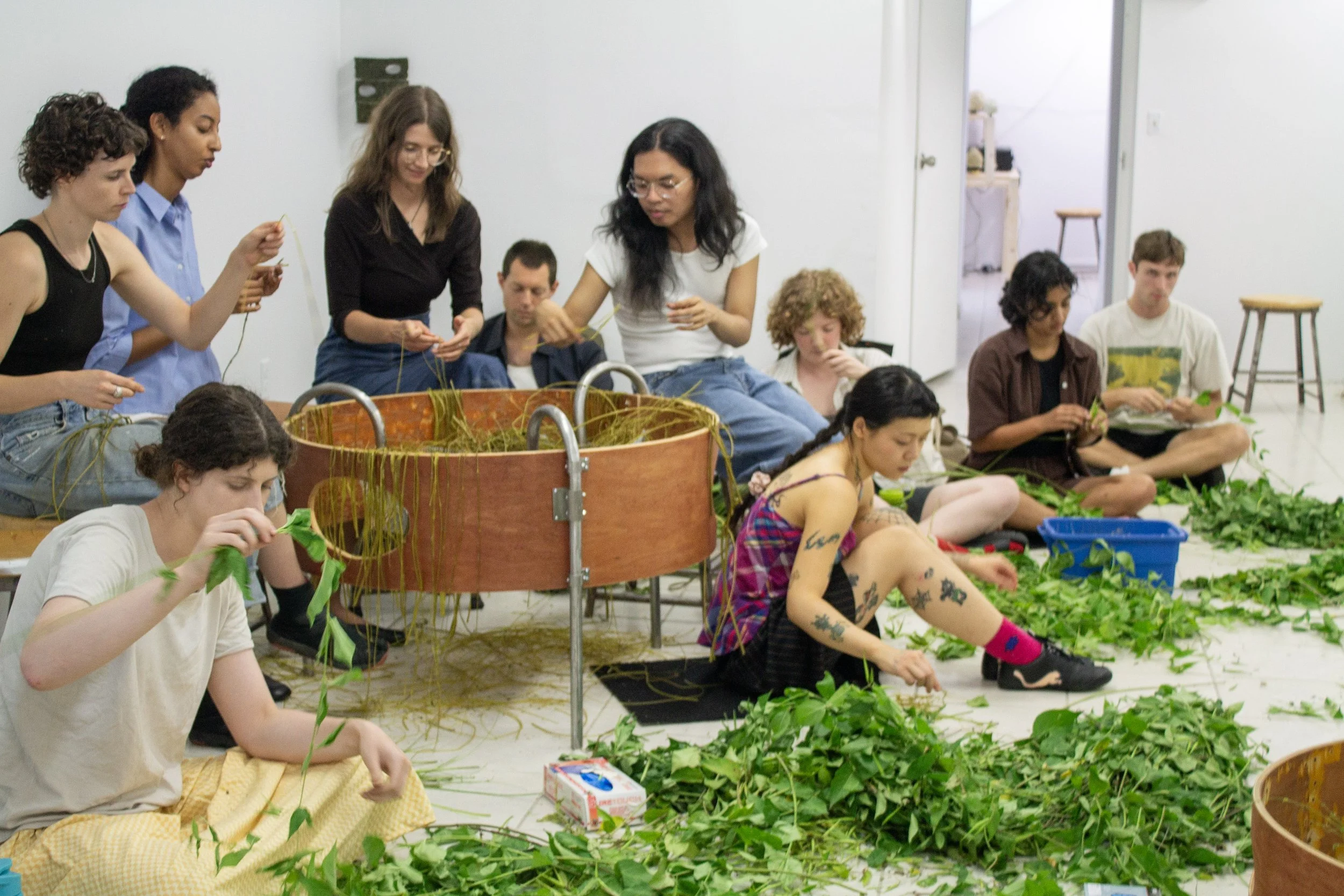
Many founding members have naturally eased into supportive roles. Swann says he cleans the washrooms every now and then. Schuster does so too and views the collective as a relay race, saying, “I did two shows and I realized my own studio practice was being left behind…and with my day job, I was burning the candle at both ends and in the middle. Now I’ve become proud of being the garbage guy. I’ll take the leftover drywall and whatever to the right places. I enjoy that.” He is quick to rave of the recent members’ offerings, particularly the 2025 summer exhibition Tunnel Mound Comeback, curated by Repard-Denniston, in which artists (Elena Kirby, Masumi Rodriguez and Emi Takahashi) and visitors processed the invasive dog-strangling vine to make paper.
the plumb’s membership, now tallying 19, causes an abundance of many forms. This includes a wide ranging skill set but also an ambiguity. Members tend to preface their statements with phrases like, “I can’t speak for everyone.” Each has their own opinion, memory, approach, and interests. O’Mahony says, “It's basically 19 galleries in one.”
Considering the gallery space itself, Green reflects, “The imperfections are okay. When [we] did the first ever show, it felt very hard to let go of the space not looking perfect, but I learned people don’t really notice, or if they do it doesn't need to be. It’s become part of our triumph.”
Some tiles are broken, walls don’t always meet the floor, cords hang loose, pipes run everywhere overhead, chewed up baseboards, doors leading to nowhere. Schuster says after descending the stairs new visitors often are surprised by the amount of space; he enjoys showing them a gallery room and then says “come over here. And they’re ‘Oh, wow there’s two of them.’”
by Ashley Diana Culver
Ashley Diana Culver (b. 1986) is an artist and writer based in Tkaronto/Toronto.