The Mesh at Hallwalls
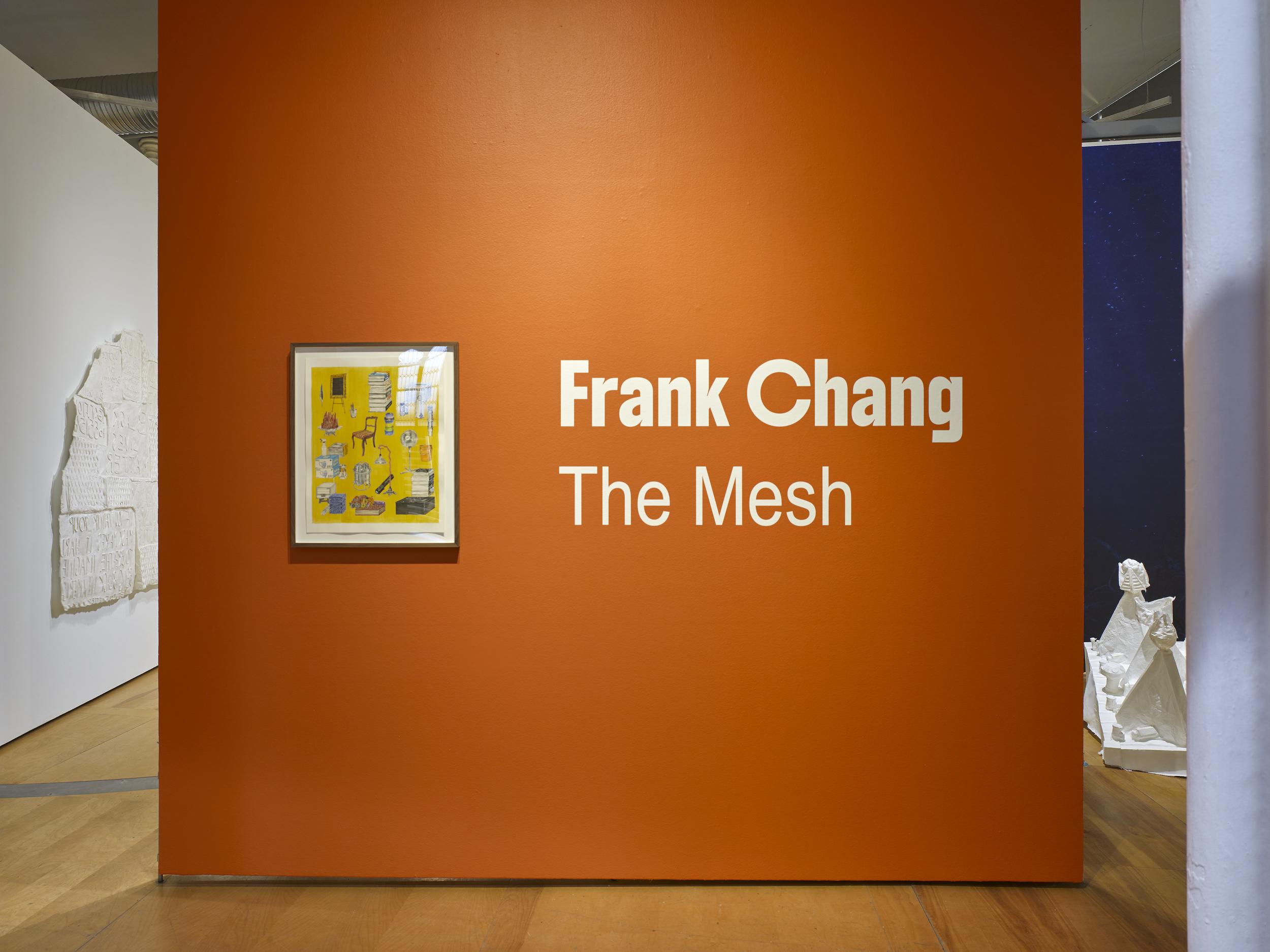
Frank Chang, Things of the Moment, 2021, installation view, The Mesh, 2026, Hallwalls Contemporary Arts Center.
Courtesy of the artist. Photo: Biff Henrich.
Frank Chang’s exhibition at Hallwalls Contemporary Arts Center opens with Things of the Moment (2021). It is a collage of drawings on paper that gathers an assortment of domestic objects from life during the pandemic: stacks of books, face masks and hand sanitizer, a black-painted canvas in an elegant frame, a fan and a lamp, a lit brazier, a chair, and so on. What holds these objects together is a uniform yellow. It is this color alone that structures the space, and within it an incongruous array of objects finds a secret order, almost becoming a collection.
The work has a counterpart on the opposite side of the wall: Entangled Experiment (2026), a large drawing on paper. Here too Chang displays a collection of disparate objects, arranged like the scattered still lifes of the painter Paul Lelong. Chromatic contrasts highlight the objects of a primitive electrical experiment against the dark background. There are glass jars in bright blue, tubes and electrostatic generators in wine red, liquids in a deep amber, and above all a mask that carries perhaps a smile, perhaps a scream, in the right corner of the composition. Just as nineteenth-century galvanism claimed that a vital electrical force connected all living beings, Chang’s yellow connects the different elements and gives the whole composition dynamism. In Things of the Moment, this takes the form of a hand-drawn yellow mesh, like a fisherman’s net, that envelops the objects. It gives them volume and lends the picture a depth it would otherwise lack. Its density partly hides the objects it holds, erasing their individuality and pulling them into a single mass. Yet they resurface through its holes, if only in fragments.
The yellow net returns in another key work in the exhibition: A Collection of Hyperbatteries (2026). A table roughly 106 inches long holds several sculptures in which, once again, the artist groups heterogeneous elements. Irregular yellow lines that lift off the blue ground of the table connect the various objects and sculptures. For art historians, it may evoke the blue of Giotto’s firmament, which opens to reveal the transcendence of the divine. The literal reference, however, is maps of the Clarion-Clipperton Zone, the area of the Pacific rich in polymetallic nodules at the center of the contemporary race to extract minerals for batteries. Here Chang plays between the erratic, cloud-like forms of the mesh that connects the sculptures on the table and the squared, mostly rectangular forms of the sculptures themselves, which echo the batteries that result from the exploitation of the ocean floors. By contrast, a sculpture like Immanence—a lumpy mass of foam, aluminum wire, and modeling board resting on books—recalls the molecular structure of something about to take shape. There is a transcendence to the ocean depths, where treasures accumulate and elaborate machines dig in search of raw materials. Chang’s interests, however, extend beyond the depths of the sky and ocean. His search brings everything back to the surface, to the here and now, and retrieves not only objects but also hidden, invisible structures.
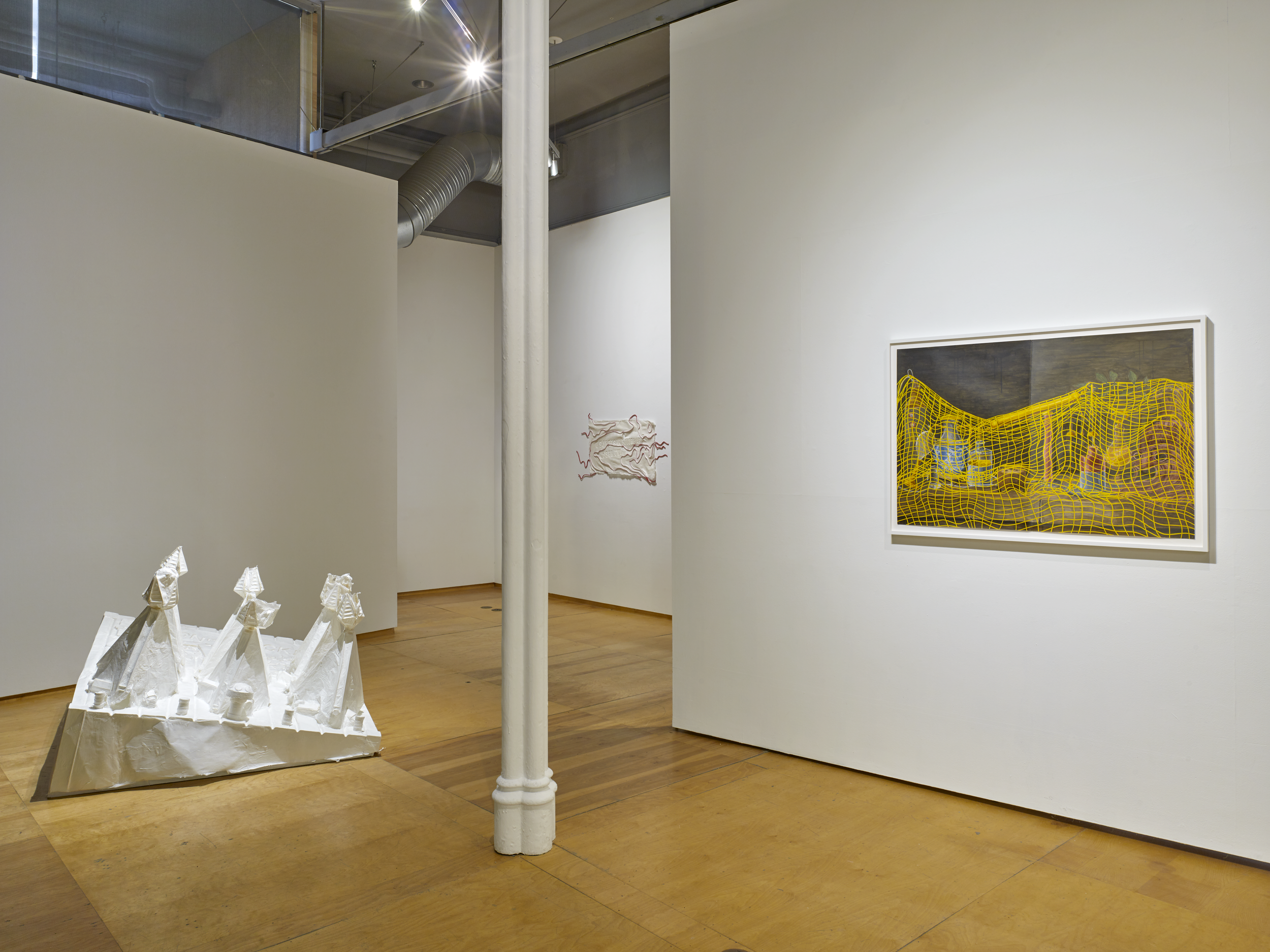
The Mesh, 2026, installation view, Hallwalls Contemporary Arts Center.
Photo: Biff Henrich.
Chang is not afraid to let his own contradictions and naivetés resurface as well. Take, for example, the unease with which he calls his practice an “archaeology of the present.” His reluctance is well founded. The term “archaeology,” originally Michel Foucault’s name for a critical reappropriation of the past, has become something of a commonplace. In certain post-structuralist hands, it has worked to open an unbridgeable theoretical distance between past and present, settling into an aesthetics of catastrophe. This risk of a critique turning into contemplation and, in turn, into a kind of powerlessness and acceptance of the status quo is certainly present in Chang. “I needed to be able to stand apart specifically because everything is so entangled with global warming,” he explains in an interview with Rebecca Wing published in the exhibition catalogue. (1)
After all, the mesh itself is not a neutral borrowing, and it carries its own risk. In The Ecological Thought (2010), Timothy Morton proposes the mesh as a means of understanding the ecological interconnection of all things, living and non-living, and how each point in this system is at once the center and the edge. (2) The concept is disorienting, and it risks becoming holistic and abstract if used to avoid the concrete dynamics of our time, which rest much more on alienation than interconnectedness. Chang explicitly draws on Morton, and the playfulness of Chang’s most iconic sculptures can be seen as a response to Morton’s call to make pleasure a coordinate of ecological thought. And yet Chang is an artist, a maker of objects rather than concepts. It is precisely the making that distances the project from complacency. The contradictions stay unresolved, held in the open and made present in the material itself.
White monochromes such as Memo to our Successors (2019), What Happens After This? (2020), and INSANITY MONOTONY (2021) attest to years of research. Here, Chang tasks fragile materials like paper or clay with registering the fractures of our age. What Happens After This?, for instance, is a paper squeeze of signs created during protests spurred by the killing of George Floyd. Chang adds nothing of his own. He relies on paper squeeze’s preeminent ability to memorialize, through a long process, what the protesters had expressed in a few minutes. The result is an epigraph, a remnant of a time that the paper makes seem long past but that is, in fact, an integral part of our present and future. But the work is also one of the most blatant examples of the contradiction that runs through an archaeology of the present. The funereal rhetoric of the inscriptions and the paper’s resemblance to marble push the killing and protest into a remote past even as the fragility of the paper draws the work back to the ephemeral temporality of the present.
Frank Chang: The Mesh (Hallwalls Contemporary Arts Center, 2026).
Timothy Morton, The Ecological Thought (Harvard University Press, 2010), 28–31.
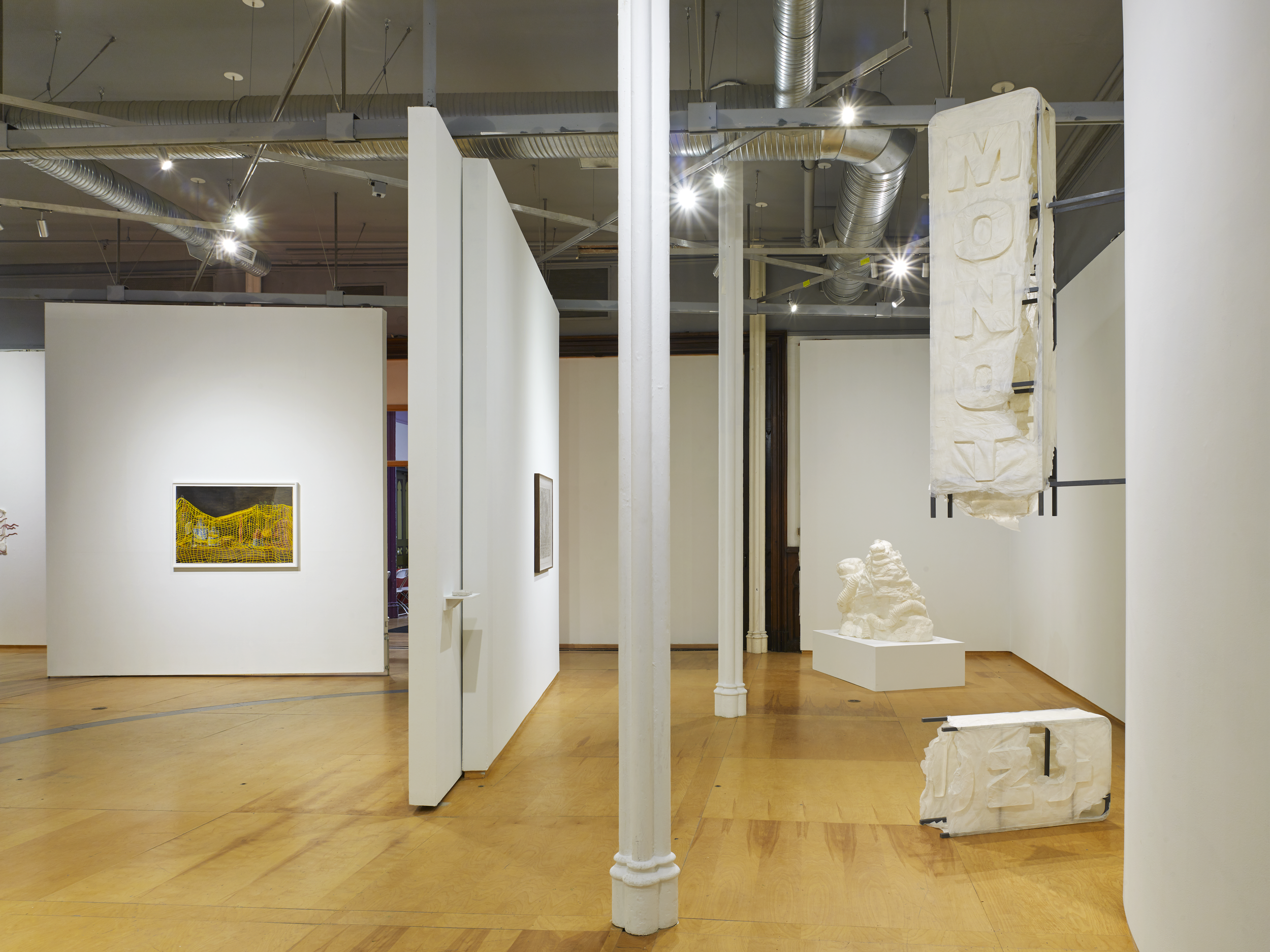
The Mesh, 2026, installation view, Hallwalls Contemporary Arts Center.
Photo: Biff Henrich.
Colorful compositions like A Collection of Hyperbatteries or Waiting in the Deep, No. 1 (2023) become hyperobjects and waste at once. After all, both refuse and archaeological finds are remains of a past that does not pass and that affects the present. Morton defines hyperobjects as artifacts destined to vastly outlast us, surpassing the function for which they were built or assembled; hyperobjects like Styrofoam and radioactive waste, for example, will survive for thousands or tens of thousands of years. (3) This posthumous existence, which frees hyperobjects from any principle of utility, transforms them into something like idols of an alien religion. Sculptures like Waiting In the Deep (2023), a monochrome heap of geological forms shaped from molded tissue paper and crossed by tubes and other objects, have something uncanny about them and, in their amorphousness, a Lovecraftian quality. Yet the irony is that the medium of tissue paper is so fragile that even as the work evokes the transhistorical hyperobject, it is profoundly ephemeral.
This very reflection on refuse as the principle and destiny of productive processes, artistic and otherwise, forms one of the most contradictory and generative cores of The Mesh. It is exemplified by the hyperobject sculptures that resemble batteries and the collages of The Search. Maps and texts, darkened and torn, are reassembled on a white sheet that throws the missing parts of the composition into even sharper relief. Yet there is no lost unity to recompose, no complete picture the archaeologist might restore. These objects keep their own singularity even as they link to one another. They are a critique of the late-Romantic conception of Nature as a unified totality that human genius might dominate. And at the same time, they are a critique of a certain ecological and green ideology in which endless recycling would let objects, like zombies, continue their non-life forever within the productive cycle (it is notable that green is almost entirely absent from Chang’s palette in this show). There is, instead, an element of pure loss in every activity, in art as in religion, as authors like Georges Bataille have often stressed.
3. Morton, The Ecological Thought, 130–132.

The Mesh, 2026, installation view, Hallwalls Contemporary Arts Center.
Photo: Biff Henrich.
Unlike religious practices, which seek to put a community in contact with transcendence, Chang’s search stays with remains, waste, and the bonds that tie them to us. The various techniques the artist uses—collage, engraving, molding tissue paper and foam—amplify this reification of loss and absence and make each object a knot in reality’s intricate mesh. We generally understand that waste and the connections it embodies are among the most hidden, immaterial, and invisible elements of our reality. Scholars like Brian Larkin have shown how, in a not too dissimilar way, the infrastructures of today’s technopolitical landscape are not only things but above all relations that connect things to one another. (4)
By making visible, in their brazen materiality, the strange amorphous objects that make up most of his sculptures and the connections that bind them, Chang sets the mesh against the network. With the network, there is an ordered, transparent, and apparently neutral link that regulates economic, political, and even personal processes. The mesh, instead, is a chaotic, material, and playful connection, a bond you can see. It is a poetics of bonds, of their visibility and their concreteness, against contemporary abstraction as the inescapable, ever-more pervasive mark of technocratic domination.
With no claim to completeness or coherence, Chang binds together objects and, with them, ecological, political, economic, and social concerns. By contrast, much recent ecological thought has asked us to grant things their own agency. The internet is spoken of as a being, the algorithm as a mechanism that acts and decides, and the social network as a force that manipulates us. This reification carries a quiet determinism, as if things could only ever be as they are. But it is those who own and program these systems—and those who use them—that make them what they are. Chang’s connections carry no such necessity. His wager is smaller and more physical. He ties one object to another; the tie is material, sometimes arbitrary, and often only a mood. And he offers no answer to the ecological emergency, which is a political emergency. Before it, the artist is powerless. Unless what Chang is after is the dirt and the pleasure of being thrown together, which, ultimately, is where any politics begins.
4. Brian Larkin, “The Politics and Poetics of Infrastructure,” Annual Review of Anthropology 42 (2013): 329–332.
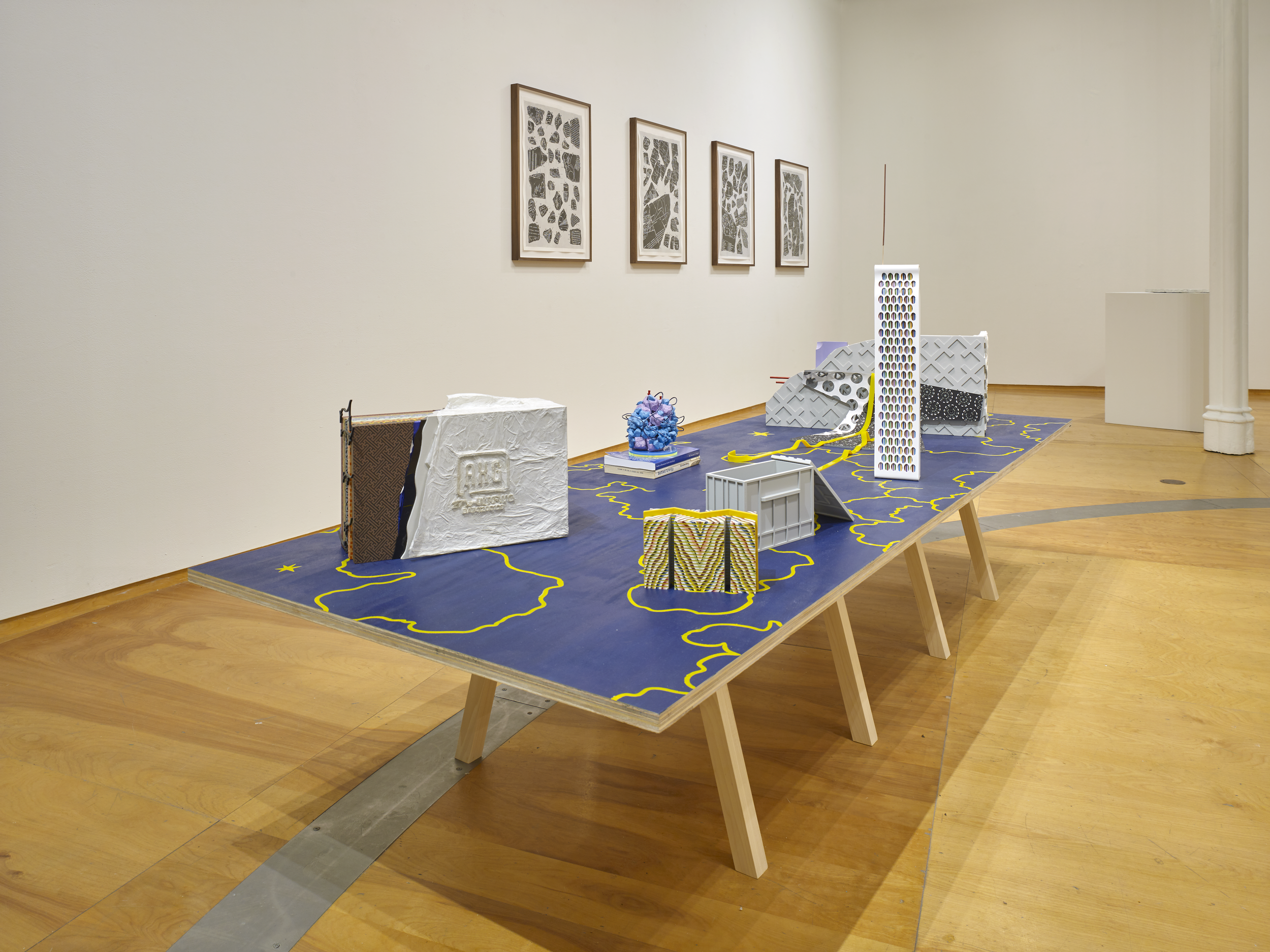
Frank Chang, A Collection of Hyperbatteries, 2026, installation view, The Mesh, 2026, Hallwalls Contemporary Arts Center.
Courtesy of the artist. Photo: Biff Henrich.
The monochrome of the clay tablets left as a memo for those who will come after us and the advertising signs that look like broken monoliths, the ever-present colored stripes in works like Bye Now Pay Later (2021) or Objects in Future Are Closer Than They Appear (2021), and even the colors taken from battery diagrams become a playful element of union. After all, long before religion, art, and politics, play is the activity that lets humans, like animals, develop their cognitive abilities and socialize. And against the presumed objectivity of the “rational” adult world, play is the realm where an arbitrary decision becomes a binding rule of the mess that becomes mesh. There is, after all, something candid and playful in these works by Frank Chang, despite the seriousness of the themes they address. A little like when a child dives into the water and comes back up happy, holding a strange object they did not expect to find, and says: There it is!
by Francesco Agnellini
Francesco Agnellini is a Lecturer in the Digital and Data Studies Program at Binghamton University. His research explores the epistemology of machine learning and the relationship between images, writing, and computation. He writes about art and AI and has translated and edited books by Georges Didi-Huberman and Louis Marin
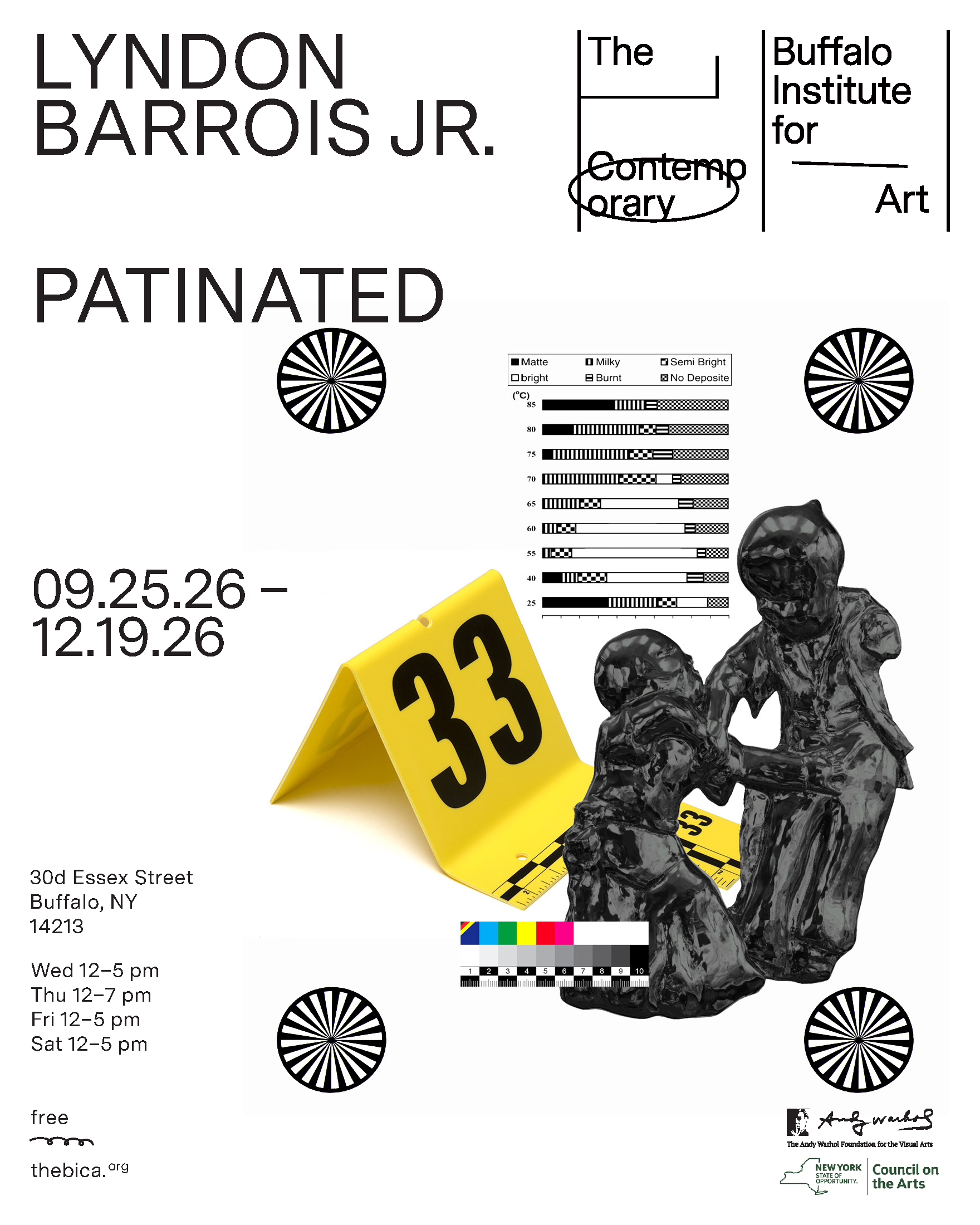
In our Main Gallery
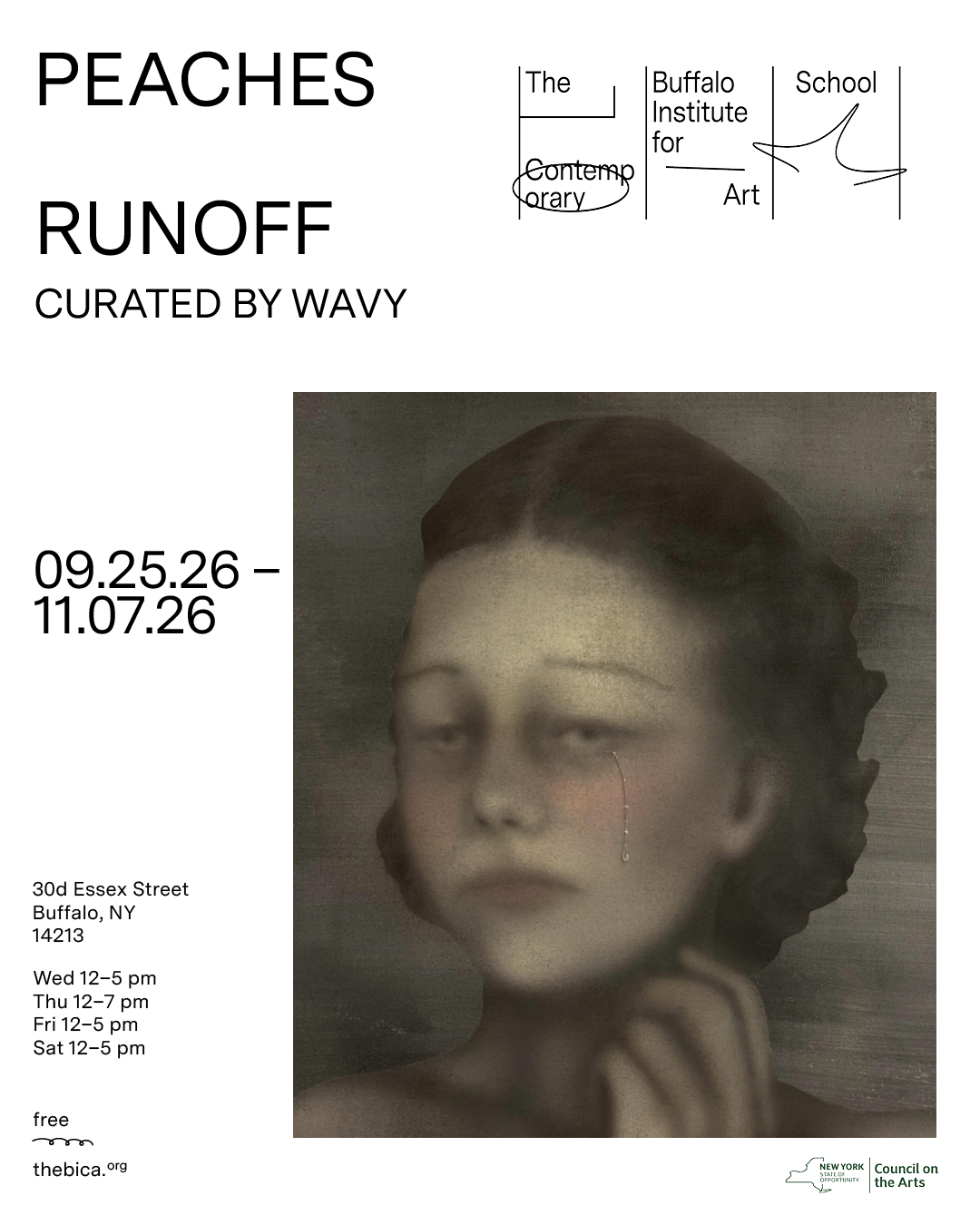
in our Project Space
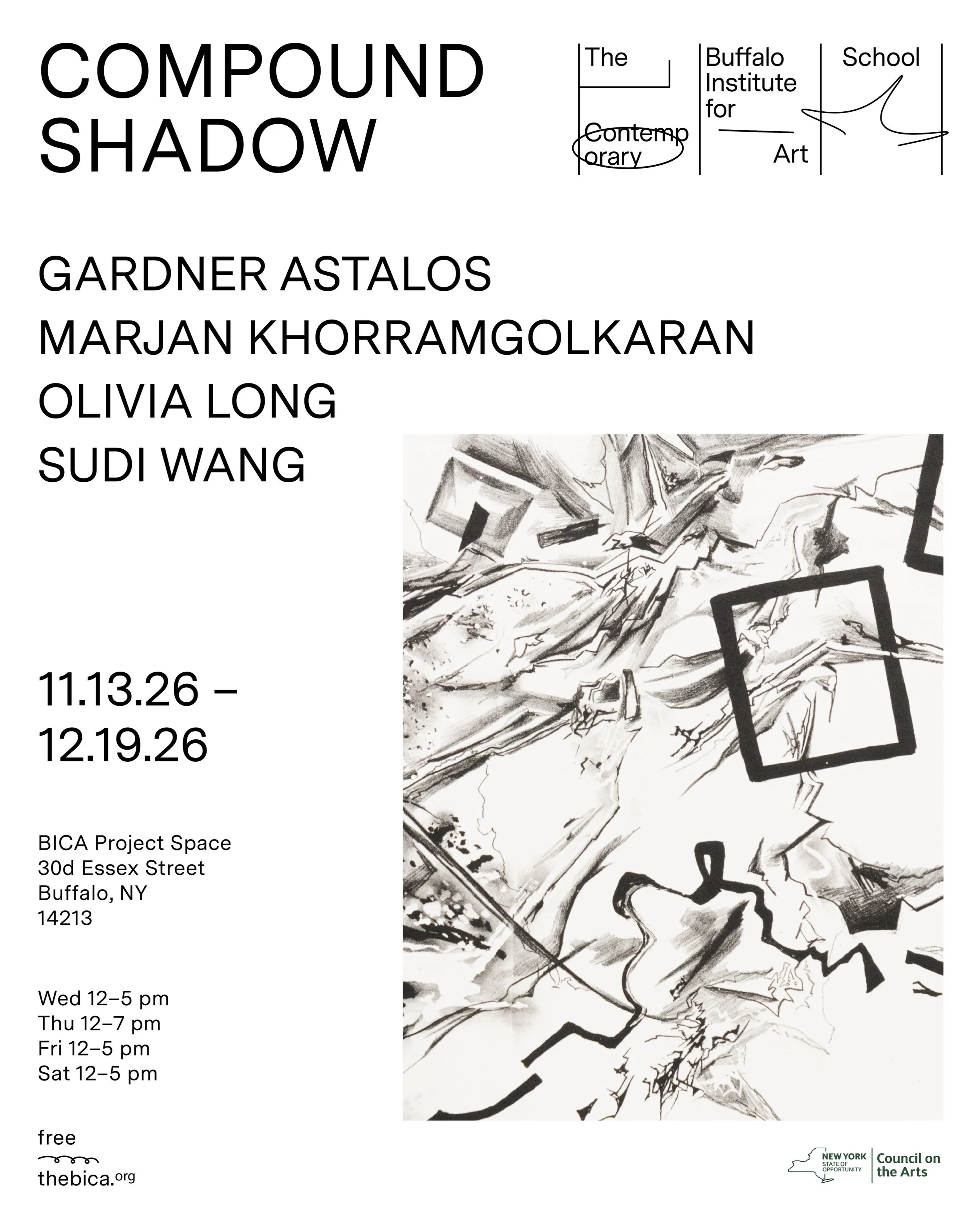
Project Space Opening 11/13