Living Peace in Every Thread and Husk
The Hodinöhsö:ni’ Art Show
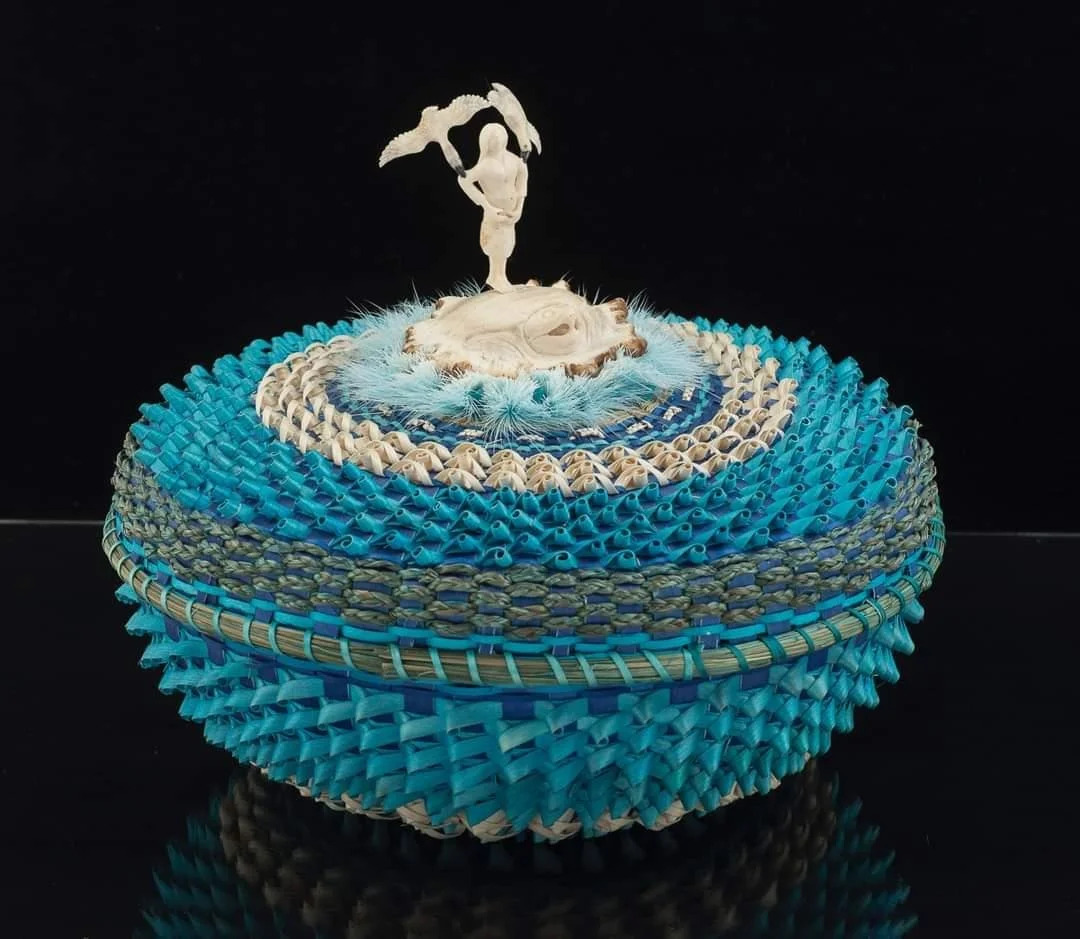
Ronni-Leigh Goeman (Onondaga), Descent of Sky Woman: Creation Story, 2019. Black ash, sweet grass, moose-hair tufting, antler finial.
Courtesy of the artist.
A piece of clay carries memory before it ever meets a potter’s hands. Earth remembers pressure and water, the long quiet labor of geological time. Corn husks, once wrapped around living kernels, hold traces of cultivation and harvest. Even beadwork, stitched with deliberate patience, gathers meaning from the histories and relationships that surround it. Such materials and memories converge in the eighth annual Hodinöhsö:ni’ Art Show at Ganondagan State Historic Site in Victor, New York.
The exhibition’s deceptively simple question—What is a Hodinöhsö:ni’ peace?—arrives at a charged historical moment. In the United States, this year marks the 250th anniversary of the American Revolutionary War. Commemorations across the country will revisit the founding myths of the republic. But for members of the Haudenosaunee Confederacy, this anniversary carries a different set of implications. The Confederacy predates the United States by centuries and is grounded in the Great Law of Peace, a system of governance built on diplomacy, consensus, and the responsibility to sustain balance among diverse nations and with the natural world. The exhibition’s theme quietly places these two timelines in conversation. The American Revolution invariably reshaped the political landscape of the continent, but the Hodinöhsö:ni’ concepts of peace animating the exhibition remind visitors that other political philosophies, older ones, continue to structure life in the region.
That context matters at Ganondagan. Once home to a major Seneca town destroyed in the seventeenth century, the site now houses the Seneca Art & Culture Center, which has become a focal point for cultural preservation and contemporary Native creativity. The annual art show reflects this dual mission. The works offered by this year’s cohort of 32 artists working in beadwork, basketry, painting, sculpture, and other mediums move between historical continuity and present-day realities.
The exhibition treats peace not as an abstract idea but as something enacted in everyday practices, including gathering materials and sustaining traditions through periods of disruption. The exhibition approaches its theme from distinct vantage points, but their work repeatedly circles back to the relationship between cultural endurance and creative adaptation.
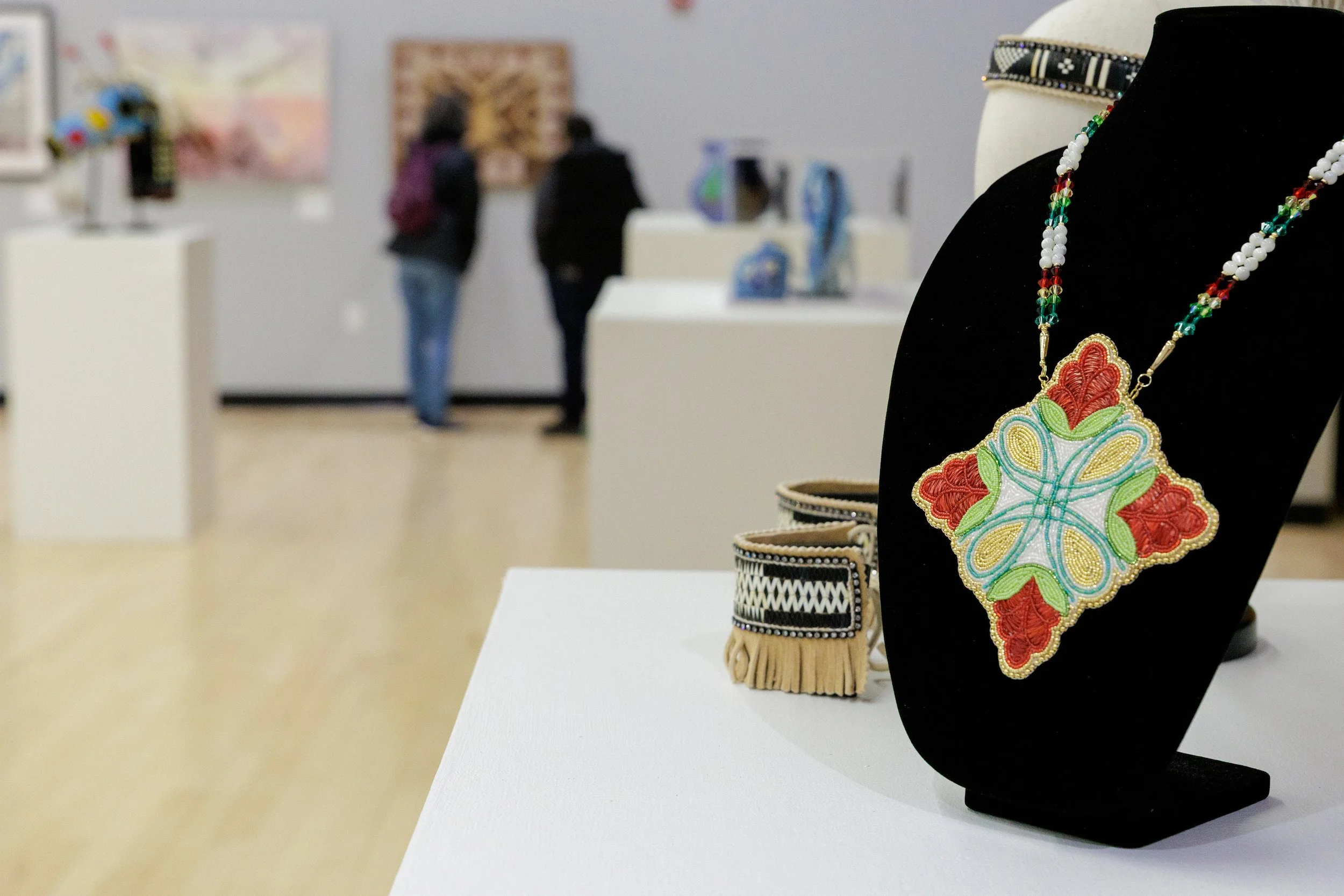
Waverli Thompson (Akwesasne Mohawk Wolf Clan), Skatne Skanekwen'tará:non (Together/Unity Raspberries) , 2026, installation view, Hodinöhsö:ni’ Juried Art Show, 2026, Seneca Art & Culture Center.
Courtesy of the artist. Photo: Alex Hamer Photography.
The pottery of ceramic artist and filmmaker Katsitsionni Fox, from the Mohawk Nation territory of Akwesasne, exemplifies this interplay between past and present. It draws on traditional forms and techniques—hand-coiling, burnishing, etc.—and incorporates contemporary materials and design elements. These works resist the idea that Indigenous art should remain visually frozen in time. Fox describes her practice as emerging naturally from childhood teachings. Stories, she notes, surface in the clay almost instinctively.
Seen in the context of the exhibition’s theme, Fox’s approach carries a subtle argument. Creative practice is one way of maintaining that continuity to which a Hodinöhsö:ni’ peace belongs without denying the realities of the present. Fox’s ceramics model a transmission of cultural knowledge not through static preservation but rather active reinterpretation.
A similar negotiation between history and present life appears in the work of Seneca artist Penny Minner, a maker of black ash basketry, graphic art, watercolors, and dolls fashioned from the husks of harvested corn. The dolls, in particular, function as narrative objects and are connected to storytelling traditions that pass down cultural values and historical memory.
Minner often speaks about the difficulty many Native people experience living between cultural worlds. Contemporary Hodinöhsö:ni’ life, she suggests, is frequently misunderstood or rendered invisible by outsiders who imagine Indigenous culture as belonging exclusively to the past. Her dolls counter that assumption. Through them she tells stories about everyday life and the political concerns Native communities face today. They operate simultaneously as craft and quiet resistance to historical erasure.
Woodworker Billy Haduweñtha Logan also explores contemporary Indigenous identity and especially its layered influences. His sculptures often incorporate traditional Eastern Woodlands design motifs—stylized plant forms, beadwork patterns translated into carved surfaces—but also reflect the artist’s experiences in urban environments and modern creative scenes.
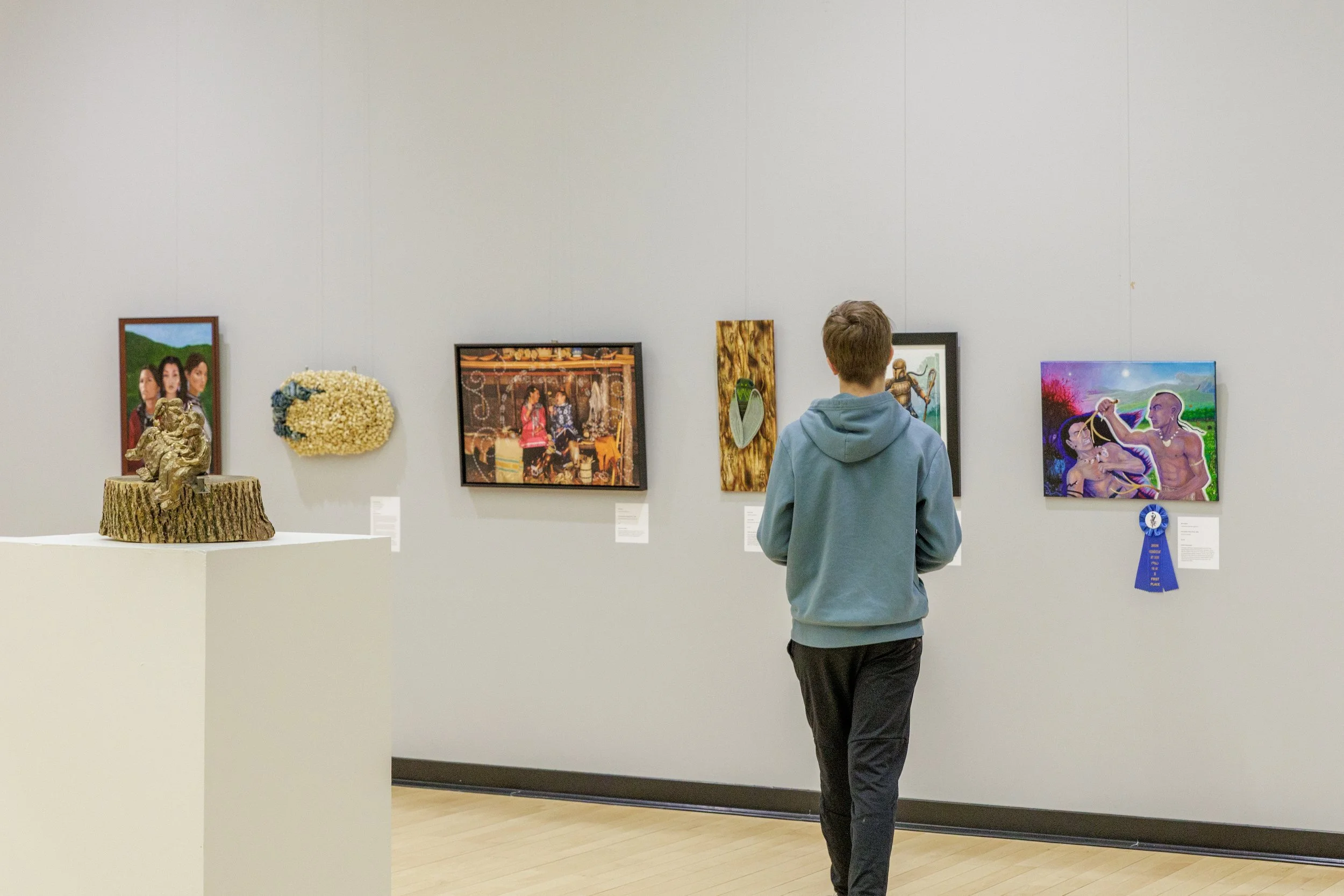
Hodinöhsö:ni’ Juried Art Show, 2026, installation view, Seneca Art & Culture Center.
Photo: Alex Hamer Photography.
Logan frequently begins by studying the grain of a piece of wood and allowing natural patterns to suggest possible forms. In Logan’s hands, the wood becomes a partner in shaping the final work, a practice that echoes an older Indigenous understanding of materials as collaborators rather than inert resources. Such a philosophy reminds viewers that a Hodinöhsö:ni’ idea of peace extends beyond human relationships to include respectful engagement with the natural world.
Painter Barry Powless, an Onondaga artist from the Eel Clan, approaches the exhibition’s theme through agricultural symbolism. His painting Three Sisters: Harvest refers to the interdependent cultivation of corn, beans, and squash, which are traditionally planted together as part of Indigenous agriculture across the Northeast. The crops support each other’s growth: corn provides a stalk for beans to climb, beans replenish nitrogen in the soil, and squash spreads low leaves that suppress weeds.
Powless translates that ecological system into a visual metaphor for cooperation and balance. In the painting, Hodinöhsö:ni’ women hold a bowl containing the harvested crops. The image reflects the role of women as agricultural leaders and caretakers of community sustenance. More broadly, it suggests that reciprocal relationships among not only people but also human communities and the land sustain peace.
Another artist in the exhibition, Kristin Witbeck Lee, explores continuity through the lens of family memory. Her painting centers her great-grandmother and Seneca Clan mother, Nora “Rocking Boat.” Lee portrays her in formal dress, the way she preferred to be seen in photographs, but also includes clan symbols, references to Hodinöhsö:ni’ teachings, small objects associated with shared family memories, and other subtle markers of identity.
The painting suggests that cultural inheritance often unfolds in intimate settings—in kitchens, forests, and everyday conversations between generations. A Hodinöhsö:ni’ peace, as part of this cultural inheritance, is not only a political principle or philosophical doctrine but also lives in personal relationships and the quiet transmission of knowledge within families.
Taken together, the works in the exhibition offer multiple answers to the guiding question of Hodinöhsö:ni’ peace. Some emphasize continuity with ancestral practices. Others explore how contemporary Indigenous artists navigate modern influences while remaining grounded in tradition. Still others return to the land itself, reminding viewers that environmental stewardship has long been central to the Confederacy's political thought.
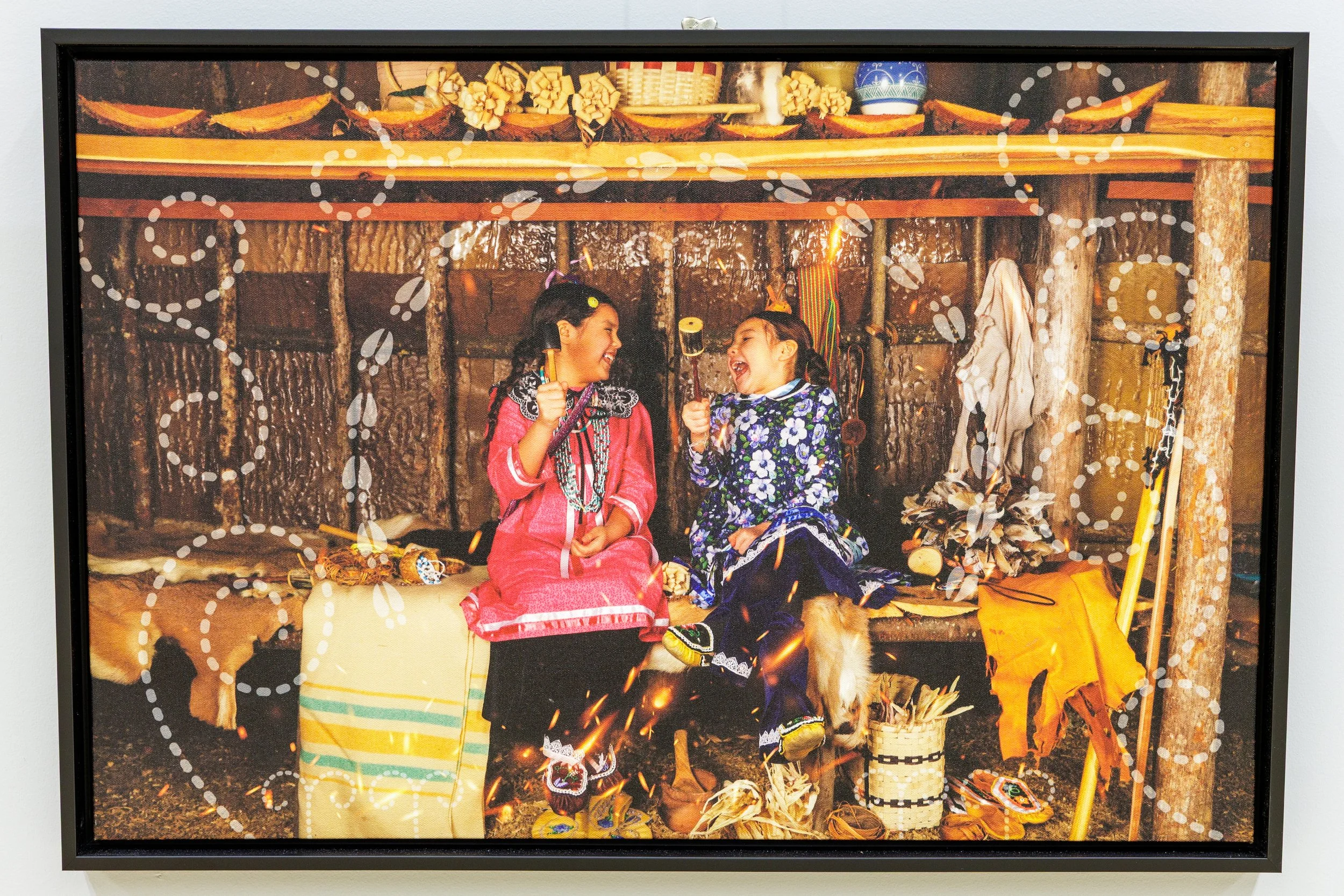
Tami Watt (Seneca Nation Deer Clan), Our Ancestors Are Always With Us, 2026. Framed photo, 20 x 30 inches.
Courtesy of the artist. Photo: Alex Hamer Photography.
What becomes clear while moving through the exhibition is that peace, in this context, is neither abstract nor purely historical. It is practiced—sometimes visibly, sometimes quietly—in acts of making and remembering. Each object carries traces of those practices.
This year’s Hodinöhsö:ni’ Art Show is also notable as the first in the series to organize itself around a thematic prompt. This curatorial choice encourages viewers to see the works not in isolation but as parts of an ongoing conversation about sovereignty and cultural survival. “The Confederacy experienced loss and devastation—not only among its people, but also in land, resources, and cultural knowledge,” says Kristin Asche, the show’s lead curator. “The artists are responding to all of that, reflecting on continuity and the living strength of our communities.”
In a moment when the United States is preparing to celebrate its revolutionary past, the artists gathered at Ganondagan frame peace as a continuing process, one that requires memory and care for the generations still to come.
Threaded through clay, husk, wood, and paint, that philosophy remains tangible. Visitors leave the exhibition having not simply viewed works of art but rather encountered a living cultural framework—one that continues to shape how Hodinöhsö:ni’ communities understand responsibility and the possibility of harmony in the present.
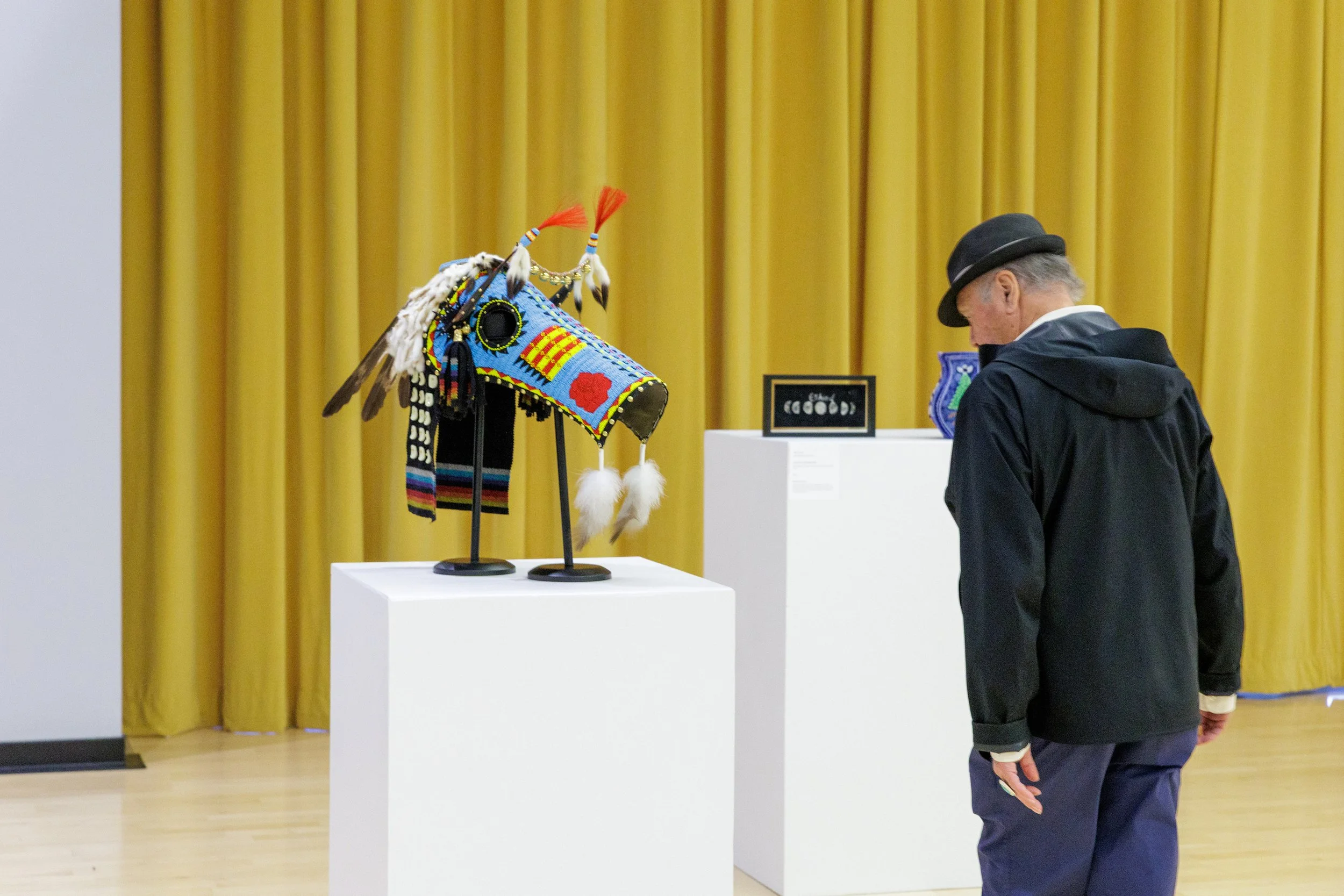
Hodinöhsö:ni’ Juried Art Show, 2026, installation view, Seneca Art & Culture Center.
Photo: Alex Hamer Photography.
by George Cassidy Payne
George Cassidy Payne is a writer, journalist, and poet based in upstate New York. His work explores the intersections of art, culture, philosophy, and social change, often focusing on how creative expression shapes community life. Payne brings a reflective, narrative-driven approach to his criticism and reportage on contemporary artists, public art, and cultural memory. In addition towriting, he works as a crisis counselor and teaches philosophy